Posts

Showing posts with the label language patterns

It takes willpower to use the language of agreement

Image
When I am training NLP workshops and courses, I ask people to do two simple exercises to build agreement. In one exercise, I ask that they have a conversations where they start everything they say with a form of Yes. No matter what their partner just said, they have to say yes before they reply. In the second exercise, they have to begin by repeating exactly a few words that their partner has just said. It's hard to imagine a simpler language pattern. When you want to build agreement, show that by saying a form of yes every time you speak. When you want to build connection, show that you are connecting by repeating something you heard before you change or add to it. These two language patterns have the power to change how people respond to you. They are 100% reliable. So what happens? People forget. They can either say yes or they can have a meaningful conversation, but they find it hard to do both. They can repeat back words or they can have their own thoughts, but they struggle ...

There are no true stories.

Image
Why would you read a novel? It's not even true. Do you believe that non-fiction books are "better" because they are "true?"  NLP (neurolinguistic programming) offers an interesting perspective on how language works. It uses words to anchor experience, so that every communication with language is completed by the receiver. The words are not the point: the connection is the point. In the meta-model, it is understood that language necessarily distorts experience because it cannot create a one-to-one correspondence between what the words say and the experience represented by the words. This isn't because people are trying to be misleading. It's the way language works. There is no evolutionary advantage to being able to predict the past or to being so accurate that no one else can connect with what you are saying. Stories are never true (even if they really happened) because they are all experiences that are communicated through language. Language necessarily...

Don't Miss It! (How Negatives Build Rapport and Engagement)

Image
I used the phrases "Don't Miss It"  and " Don't start" in an ad, and someone made a comment about my "interesting" language. I don't know for sure that what interested that person was the use of negatives, but it made me think about the way people get hung up on a formula for what they should or should not say. photo by: canstockphoto.com/chrisdorney Once someone challenged me on the use of the word 'problem.' He felt that it was inappropriate in the work I was doing. I felt it was inappropriate to tell people that the things that troubled them were not problems or to hide from problems or to overlook them. In fact, "negatives" can be a strong opening. We all know that: it's not an unusual strategy to catch people's attention with a warning or to motivate people by giving them a problem to solve. They are strong because they connect with people where they live: that ad was written to catch the attention of the...

Can you analyze and agree at the same time?

Image
What do these words mean to you? The Meta Model classifies them as distortions and generalizations. But to the people who put them on these sticky notes, they represented a very specific shared experience. Part of the reputation of NLP was established by its approach to language. The Meta Model  promises to help you look beneath what people are saying to discover what they really mean. It's based on understanding language as a distortion of reality. Even if it were accurate (I wouldn't argue that), it's a framing that is almost bound to get you into trouble unless you remember one cardinal rule (most people don't). The rule is this: you can only dig deeper with permission and you can only tell you have permission when you are spending most of your attention building agreement. As a coach, I sometimes work with high performers on analyzing their patterns of thought or behaviour so that we can identify leverage points for change. This is stressful, but the...

Surprise! Language doesn't have to make sense to be effective

Image
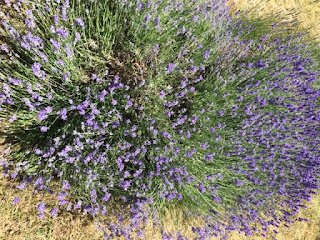
Recently I read a very good book by Amy Herman called Visual Intelligence . In the end, however, I thought her comments on effective communication should have been defined better. Her advice is very good when the purpose of language is to have information jump from one person to another. But that's not the only purpose of language. There are other roles for language to play, and other ways to use it brilliantly. Surprise! A burst of lavender doesn't make sense but it does activate your senses. While it is useful to be preoccupied with making sense (which means taking sensory information and understanding it as having meaning), it is less useful to be preoccupied with having your words make sense. Here are three times when you might be brilliantly effective by being less clear and sensible: Your primary purpose is to build a connection. If this is true, your language needs to mostly mirror the style and strategies of the person or people with whom you are speaking. Thi...

The difference one word makes

Image
What do you see in this picture? If you had to choose just one word to describe it, what would that word be? Would it be BEGINNING? People are always celebrating a FRESH START. Do you think this is what they envision? A fresh start begins with destruction of what came before. Nothing begins fresh - even a tiny embryo carries a lifetime of baggage in its DNA. To change, we need to destroy. Or we can look at this picture another way: destruction is the way the soil is prepared for new growth. We seldom speak in just one word. We speak in long, flowing patterns of words. And yet, within those patterns there will be a word with oomph, a word that defines the mindset represented by our language. This word is the frame through which we see, the state the describes our experience. If you had to choose just one word to jump from this picture, what word would you choose?

Calm: A quiet space in a complicated world

Image
Here's what we imagine family life to be: serene, calm, harmonious. At least, this is how we imagine other people's families, the ones we see in the perfect Facebook photographs. Our own families are more. . . complicated. Family Day weekend is a good time to reflect on perfect images. As I write this, the sun is shining on bright white snow. It's also about 25 below zero (celsius). It's a great day to sit by a window. We think that photographs tell the truth, but they only ever tell part of the truth. Words are like that too. They turn our focus to one thing, and other things disappear. Even when we use words like complicated, we miss something. There are elements in every situation that are simple, uncomplicated, true. When you use a word like calm, you can focus on difference. Calm is not complicated, not crazy, not loud, not anxious.  Or you can simply focus on one thing that is grounded and real and clear. As you read this, you can hear that last phrase: g...

How to Find What You Need to Write

One of the many things I love about my work is that I get to know great people who are as dedicated to learning and language as I am. One of those people is Sheri Andrunyk. Sheri and I connected over tea one day, and we have been supporting each other as teachers and writers ever since. I'm very proud to have trained Sheri in NLP, and it has been fun to cheer her on as she founded and has nurtured I C Publishing. Here's the short version of what Sheri has contributed to so many writers, entrepreneurs and coaches: "Sheri Andrunyk is the founder of I C Publishing (tour sponsor) and the I C Bookstore, entrepreneur expert, mentor, and author of Working From Home & Making It Work and Hearts Linked by Courage. She is writing two more books this year, and is extremely passionate about providing more choices, resources, and high level support to other writers, business professionals, wellness coaches, and spiritual mentors." In my contribution to this year...

I'm Finished

Eeek!  Those words are scary. I am finished. Without context, it is impossible for you to know if being finished means having accomplished something that took time or being washed up, kaput, toast. I quite like toast. But being toast is not a good thing. I have just finished the big edits on my new book. Tomorrow I will do some technical stuff, then post it to the publishing site and let it go.  I'll still need to support it, nurture it and worry over it, but I will no longer be able to change it. Finished is a terrifying word. We are so used to everything being open to change, everything being in flux. The moment when we complete something is the moment we come face to face with a limit that cannot be crossed. Of course, the book is only finished being written. Soon it can start having a life of its own, moving around the world and interacting with people in ways I might not even imagine. And if I don't want to be finished, I just need to turn my attention to one ...

Improving your choice of words

There's a truism that says you are more likely to hit something if you are aiming at it. We say things like "keep your eyes on the prize" and mean that paying attention to your outcome is likely to give you both a strategic advantage and the willpower to persist until you achieve what you want. We say these things because they represent a hard lesson. Take, for instance, a desire to be better spoken, to be able to talk in a way that impresses people more favourably. Most people try out new words or model great speakers in a concentrated effort to improve their choice of words. Ironically, their very first steps take their eyes off the prize. The prize is the good impression you make on a specific person or in a particular situation. And the only way to know how to make that impression is to become curious about the people and situation you want to influence. You need to notice what actually captures positive attention, what needs to be true for people to pay attention...

Instead: A powerful word for moving conversations

It is the way our brains are made. We fixate on problems and danger and obstacles. Ask anyone about their pet peeves and you will unleash a flood of words. Ask someone what they want, and you are liable to hear about all the reasons that what they want doesn't matter. It is easy for a conversation to grind to a halt when it is carrying the weight of so much that is wrong. If you want to move forward, you need the word instead. Repeat some of the troubles you hear (to show that you are listening) and then ask: what would you like instead? Instead means in the place now occupied by the trouble. To answer the question, the speaker has to imagine a world where the trouble no longer exists. It has been replaced by something else. The something else may, of course, be accompanied by new troubles.  Once again, repeat what you are hearing and then ask: what would you like instead? After two or three repetitions, the speaker will pick up the pattern and begin to automatically replace ...

A very powerful question

How would practice change the way you handle this? Say, for instance, that you are managing someone who is declaring that the sky is falling because the market has changed. Ask that sales rep: "What would be different if you already had lots of practice in handling these conditions?" Say, for instance, a new parent is frantic because s/he had no idea a baby would be. . . a baby. Ask that parent, "What would be different if this was your third baby?" Say, for instance, someone close to you has just been laid off, someone who has never before lost a job. Ask that person, "What would be different if you had been laid off in the last recession? What would you know or do that is different now?" Here's how the question works. First, it normalizes the situation as something that one could expect to have 'practice' handling. We practice things that occur regularly and are therefore not entirely unpredictable. Second, it is a tricky way to ask som...