Posts

Bet on yourself

Image
 It's one of the most famous slogans in basketball. "Bet on yourself," says Fred Van Vleet. He's building a whole brand on it, a brand based on hard work and all-round toughness. Bet on yourself. It carries both the connotation of pouring all your efforts into your own success and the recognition that success is never a given. It's a bet. In Thinking in Bets , Annie Duke explores the idea that most of our decision making is like placing bets because we rarely have all the information we need to guarantee success. This is a great summary of the book.  The key idea is that we need to separate our decision making process from our results if we want to make better decisions. You can get good results from a bad decision and you can get bad results from a good decision. But you can't get consistently good results from consistently bad choices. At NLP Canada Training , I teach people the skills they need to bet on themselves, to make good choices based on the results...

How to trust yourself (you don't even know yourself)

Image
 It was a beautiful, sunny afternoon and I'd worked all weekend. So I got up from my computer and went for a long walk. I was looking for stress management through fresh air and exercise. And I was looking for something more. One important, invisible problem with knowing we have an impact is that we are not really sure who "we" are. We call the part of our mind that makes most of our choice the "unconscious." This is not because it lacks consciousness (it's always wide awake) but because we are not conscious of it within us. How can we trust ourselves when we can't even know ourselves? It's the fundamental insecurity of life as a human. And the answer, is that we cannot see or know our unconscious selves, but we can observe their connection to the world around us. You can notice how the things around yous resonate with the things in you. You can develop awareness of how you show up in your relationships with people and with the problems you like to s...

The one choice you can always make

Image
What do you get to choose? It's too easy to say that you cannot choose what happens to you, but you can choose how you respond. That turns choice into a consolation prize. We think we "have to" choose instead of we "can choose!" We get to choose our actions and reactions without being fully aware of how they will make change in the world. That sounds dangerous, and it is. But it is also the seed of optimism. No matter what happens to us and around us, there are choices we can make.  Identifying the choices that you have the ability and resources to make pushes you to be more self-aware: more aware of the feelings, perceptions, biases, memories and hopes that combine to keep  you moving. Self-awareness is fundamental to both feeling better and having better influence on others. When life knocks you down, you look up and say "so what can I do next?" You can change your mind, your communication, your actions. You can begin with an impulse or an inventory....

A place for us: where do you have your best conversations?

Image
 Try this thought experiment. Think of three wonderful conversations you have had. You might not remember what you said or even what you heard, but you remember the flow of words and the way you felt. Now look around each of those memories. Where did they happen? Now connect the "where" to the "what." Some wonderful conversations are wonderful because they make you feel so close. You feel that you and the other person (or even a group) are sharing a mind and heart. And often those conversations happen in close spaces, spaces where you share so much in your senses that it is easy to share similar thoughts and feelings. Other conversations require more space. High ceilings or wide open skies. The room to stretch your legs and create motion. An expanse around you that creates expansiveness in your thoughts. People get confused by science. They think that because science is rational, the only way to be practical is to pretend that our bodies are separate from our reason...

Are you in a good place?

Image
 Place is such a basic metaphor, that sometimes we forget there is a difference between our physical location and our state of mind. We've all heard that the thing that counts in real estate is "location, location, location." There's a good reason for that. According to research described by Annie Murphy Paul in The Extended Brain , we use our surroundings as a way to prompt our thoughts. When we are out in nature, we think one way and when we are staring at a computer screen, we think another. Although our experience of our thoughts is that they are related to content, often the kind of thoughts we think are also related to context.  We have a lot of language about place: we have to find our place and know our place (sometimes in that order). While it's hard to change what goes on inside our heads directly, it's easier to change our place. We can get up and move to a new location. We can choose a walk under trees or a quiet, safe den (we name our thinking spa...

7 Dimensions of a Life Well Lived

Image
 When someone asks "What do you really want?" the answer tends to come up in pieces: we think about what we want in one part of our life. It's hard to think about all the parts of our lives at the same time. Yet everything we do in one relationship or project or place affects who we are and how we show up in all the others. It's like a jigsaw puzzle. You hold one perfect piece in your hand but it only works if you can find out how it fits with all the others. Photo by    Lynne Bookey   on   Scopio We cannot see the whole puzzle of our own lives. It's more than our conscious minds can handle and it's always changing. We are only comfortable thinking in 4 dimensions (height, width, depth and time). But if we use our extended mind (we journal, we connect with others, we create physical spaces as memory aids) we could stretch to 7. And with 7 dimensions, we can begin to see how the pieces come together to form a life well-lived. There might, of course, be more tha...

Something bad happened. What now?

Image
 When something bad happens, people generally fall into two camps. One camp says: "This bad thing happened. We need an investigation and we need apologies. We need restitution. We need justice." These are all good things but they are mostly attempts to solve a problem that is in the past. This is what grief does. It makes us look back and value what has been lost. They build a lighthouse so others will know where the dangers are. As we heal from grief, we ask different questions. What's next? This is the response of the second camp. That happened and it's horrible. But now what? What do we want next? They know that a lighthouse isn't enough. You also need a better boat if you want people to travel safely. The second camp is the NLP ( neurolinguistic programming ) camp. It believes that the best way forward is to make a mental model of a desirable future. It's not enough to know what you wish had never happened. You have to know what you want to rise from the a...

Agree to Disagree if you want to get better

Image
 I suspect that much of what gets written about disagreement gets dismissed as soon as it is read. It's not that readers actively disagree. It's more that their brains feel safer with agreement and so they find ways to resist the suggestion that active difference is essential to getting better. If you always do what you've always done, you won't always get what you've always got. The world will change around you and failure to evolve means failure to thrive. You need difference not just to grow, but to maintain. This is one of the rare instances where a pattern is more evident to our conscious minds than it is to the brains which set up our attitudes and behaviours. There is no easy answer. The best advice is: Listen more than you talk. Sit with other ideas before you respond to them (easier said than done). Make ideas feel safer (to you or to others) by focusing first on common ground than new ground, over and over again. Look for models of disagreement that works....

Know Your Own Brain

Image
 What have you given up on before you even started? There are so many things we try a little and then stop because the learning curve seems too steep. We can't do everything, and so we stop doing something that might take too much effort or too much time to understand. Fair enough? It's not fair enough when it comes to understanding how you are making choices. You might know your own mind but that mind is shaped by your brain. If you don't know anything about your brain, it's hard to know when to trust your thinking and when to challenge it. Allow me to introduce you to Lisa Feldman Barrett.  She's one of my favourite sources of news about how the brain/body system works. When you read 7 1/2 Short Lessons About the Brain  you'll understand how  how many things you "know" about your brain that are just plain wrong. And you'll see how having better information connects to knowing yourself better and making better choices. This is a short, easy read b...

Listen Better to The Voice in Your Head

Image
 How is that key relationship going for you: the relationship with the voice in your head? How often do you fight with that voice, or sneer at it, or walk away from it discouraged? If you were to describe a relationship with another person the way you describe your feelings about the voice in your head, how would that sound? There is no divorcing the voice in your head; you cannot silence it and you cannot make it respect your boundaries. This is the relationship that you can negotiate but not ditch. Here are three things to consider the next time the voice in your head does not seem like a good friend: The voice in the head is always on your side. It's not always tactful or friendly or upbeat, but it is on your side. You made it. You can meet the complaints and criticisms and fears with compassion. We are all in palliative care: we are all scared of running out of time or health or hope. If you were visiting someone who sounded like the voice in your head, you could dig in and fin...

Where to find a unicorn in a pandemic

Image
Have you been feeling the need for a unicorn lately? A mythical creature of healing and hope that magically appears to right wrongs and detoxify with a touch of its horn? I wonder if you would recognize a unicorn when it appeared.  You might say, "it's just a horse, or a trick, or I saw it wrong." Four days a week, I meet with two 5-year old friends and we make crafts and tell stories by Zoom. It takes about ten hours a week to do the Zooms and prepare stories and crafts, and most of those hours come out of the middle of my day.  We sometimes call the middle of something the heart.  At the heart of my days is a five year old giggling.  In that moment, all is well. That's a unicorn. If you need a unicorn, be one.  The girls' moms think I am giving them the most amazing gift by showing up for their kids in the middle of the day (and letting their moms get one work call in without an interruption). They think that I am the unicorn. But I know that in the middle of ...

Keep hitting 'reset'

Image
 If you're like me, you're frustrated. There's too much work and too little laughter in your days. There are never enough hugs. Times are tough, and you suspect they will stay that way for the foreseeable future. So what will you do? I know. Hibernation is a great idea, but it doesn't work for human beings. Pretending you're fine works for a while, but eventually even you realize that faking it isn't helping you make it. And you've tried wallowing, but it's not really you. So hit the reset button. That's frustrating, too. I know. For one thing, often the reset button is actually a hole into which you have to insert a push pin or paper clip. And then you have to wait. And isn't that just so very 2020? Photo by    Linus Strandholm   on   Scopio And yet, over and over again, you'll hit a moment when you are sad or angry or distracted. And the right answer is to push reset. Don't try to get better yet. Try to get back to neutral. Get up and m...

3 Ways to Improve Your Mindset as COVID Winter Approaches

Image
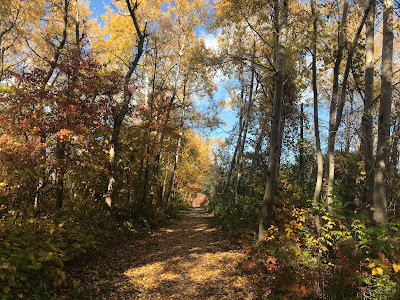
  Fall is a little magical. We notice the light, and forget a little that it is easier to see the sky because there are fewer leaves every day. At the end of this lovely path is winter. In Canada, even bright winter days are short. Overall, the winter is dark and often damp and sometimes very cold. Patios are less attractive after Christmas and even walking is harder in wind and ice. So we all know what is coming, and we know that COVID will make it worse. What we need to know is what will make the coming season better? Stretching a little now will set you up for more of what you need in the months to come. Here are three practices to get you started: You might not have run an actual marathon, but you have had projects and experiences that seemed like marathons. These are your foundation: the evidence that you CAN keep going and the models of strategies that work for you. Lean into them. Be curious about how you managed to stay focused and keep moving. How does that help now? Peopl...

Are the walls closing in? It's time to create some space

Image
Welcome to Canadian Thanksgiving, 2020 edition. Do you feel like the walls are closing in?  We're experiencing the last few weeks when reasonable people expect to sit outside and enjoy it. And we're facing our first COVID winter, a time when gathering outside is probably unpleasant and gathering inside is either forbidden or risky. Our kids are still in school, but they are confined to their desks for most of the day, their worlds reduced to a few square feet of not-very-comfortable territory. It's tough in here. It's tight and getting tighter. So what can you do? You have access to three powerful tools for creating space.  The first is movement. If you can, get outside and walk. The weather doesn't matter so much when your muscles are warm and working. The skies are always higher than the ceilings, and you'll see people or animals that are sharing your world and moving with you.  The second is connection. I know that a phone call or video call is not as good as...

It takes willpower to use the language of agreement

Image
When I am training NLP workshops and courses, I ask people to do two simple exercises to build agreement. In one exercise, I ask that they have a conversations where they start everything they say with a form of Yes. No matter what their partner just said, they have to say yes before they reply. In the second exercise, they have to begin by repeating exactly a few words that their partner has just said. It's hard to imagine a simpler language pattern. When you want to build agreement, show that by saying a form of yes every time you speak. When you want to build connection, show that you are connecting by repeating something you heard before you change or add to it. These two language patterns have the power to change how people respond to you. They are 100% reliable. So what happens? People forget. They can either say yes or they can have a meaningful conversation, but they find it hard to do both. They can repeat back words or they can have their own thoughts, but they struggle ...

There are no true stories.

Image
Why would you read a novel? It's not even true. Do you believe that non-fiction books are "better" because they are "true?"  NLP (neurolinguistic programming) offers an interesting perspective on how language works. It uses words to anchor experience, so that every communication with language is completed by the receiver. The words are not the point: the connection is the point. In the meta-model, it is understood that language necessarily distorts experience because it cannot create a one-to-one correspondence between what the words say and the experience represented by the words. This isn't because people are trying to be misleading. It's the way language works. There is no evolutionary advantage to being able to predict the past or to being so accurate that no one else can connect with what you are saying. Stories are never true (even if they really happened) because they are all experiences that are communicated through language. Language necessarily...

Are you waiting or are you growing?

Image
Have you been stuck in a waiting room for the past three months, or have you been building something? The lockdown has changed a lot of things, but it hasn't change this basic choice. We are always either circling or growing. Usually when we are circling, we are running from one thing we know to another in a cycle. Other people look and see busy. We see busy. But that doesn't always mean growth. It can mean wearing a rut in our thinking. The lockdown grabbed us by the shoulders and said "sit still." It felt like being plunked into a room and being told "wait here." Wait for the news that will change your life. Wait for the principal. Wait for the dentist's drill. Kill time until you get back to your real life. Many people were already living in the waiting room. They were hoping something would change around them, that something would  open up new possibilities. But their minds kept running in the same patterns, so they kept seeing and doing the same thi...

Growing stronger is more satisfying than just hanging in

Image
Photo by Ivan Babiy at scop.io Are you hanging in? There's a sense these days of life suspended - I mean both that it feels like we have been left hanging and that we have been shut out of our real lives for an unspecified amount of time (probably much longer than you hope as your fingertips begin to bleed). Some people have lost their work and some are overwhelmed by work. Some are trying to be full time parent/teachers/caregivers while also doing their day jobs. As if. They are quickly becoming their evening into night-time jobs too. They don't have a choice about their circumstances. They do have a choice about how to respond, and so do you. You can hang in there and hope that you will adapt (or that life will go back to normal before you have to adapt). Or you can recognize that many, many changes are coming, and you can start developing the strength and flexibility to build a life that satisfies you, no matter what happens. If you've read this blog befor...

A long walk with no particular destination

Image
Tyler Tang, Scop.io How do you feel about the title of this post? Some people love to go for a long walk. Many famous people have gone for long walks every day, just to think. Other people walk for exercise: it doesn't matter where they go as long as they keep moving. And some people walk because it's a good way to get where they want to go. Someone asked me today to talk about how to successfully be in a relationship with your partner or family while under quarantine. I am suspicious that what you are feeling now is what you feel when you go for a long walk together.  Humour me. Think of your partner or one person who is living with you in isolation from the rest of the world. Have you ever been for a walk with this person? What did you like about it and what was difficult? Did you get in sync and did you have the same need to talk or to walk in silence? Did you walk one behind another or side by side? What made this walk worth remembering (because you are rememb...

Owning all of you

Image
I've recently had discussions with people who were worried that they could never be all of one piece, that choosing a different path meant that they would be permanently severed from their old selves. It's a worry that can keep all of us stuck from time to time. If I change, what will I lose? The answer is to stop thinking that you are your path. You can only walk one path at a time, but you can choose lots of different paths over time, learning and growing and exploring without losing any part of the self. The brain does not have to cut off old connections to make new ones. A new path doesn't make the old path bad or wrong. That's not to say that your new path might not be bumpy, or go through swamps or run into impossibly steep cliffs. One of the more difficult truths about human life is that we often grow strength and flexibility by confronting obstacles. Achievement is wonderful, but failure is a teacher who  often sticks with us until we get the point. The ...